
Samuelson on Hayek: Praise, Condescension, and Misunderstanding

A recent tweet by Patrick Ponce drew my attention to a short piece by Paul Samuelson from 2009, “A Few Remembrances of Friedrich von Hayek.”

The piece is interesting per se: it is always interesting to learn what one Nobel laureate thinks of the work of another laureate. But, there is also something quite revealing about Paul Samuelson’s late-life remembrance of Friedrich Hayek. Let me explain.
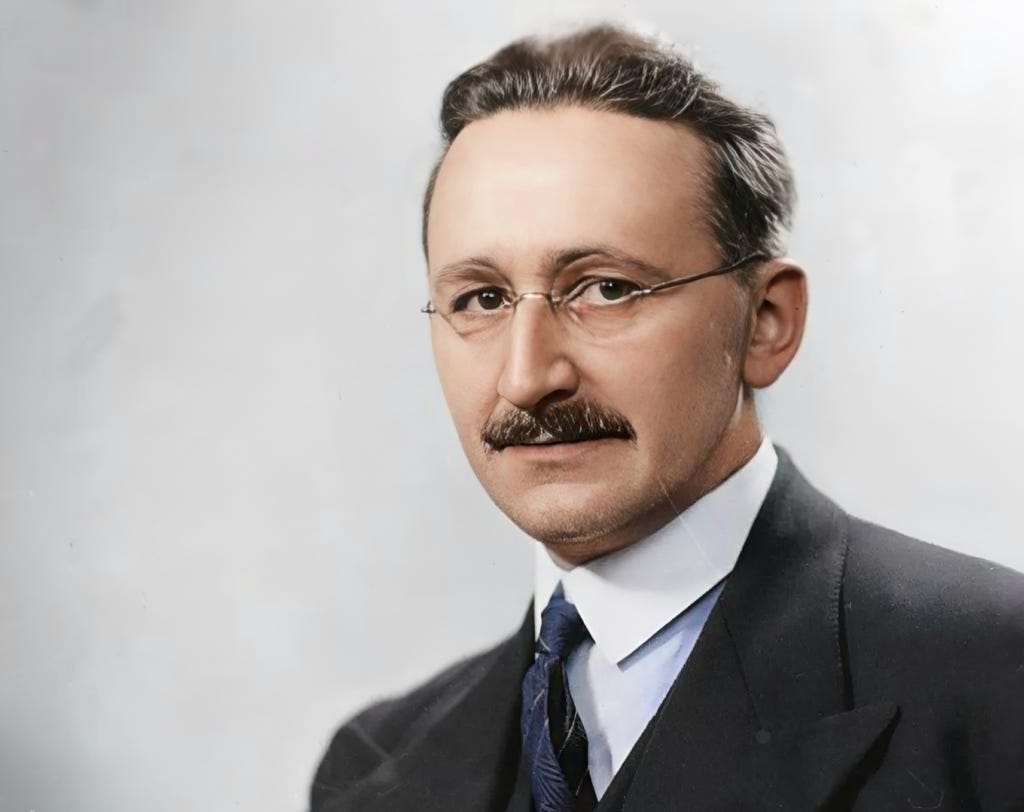
On the surface, Samuelson is generous. He calls Hayek’s Nobel “worthy.” He credits Hayek with an important contribution to “information economics.” He even concedes that Hayek “was actually the debate’s winner” in the socialist calculation debate.
But beneath the compliments lies a remarkably patronizing essay, one that treats Hayek as a brilliant but fundamentally misguided eccentric whose main ideas were either confused, disproven, or psychologically driven.
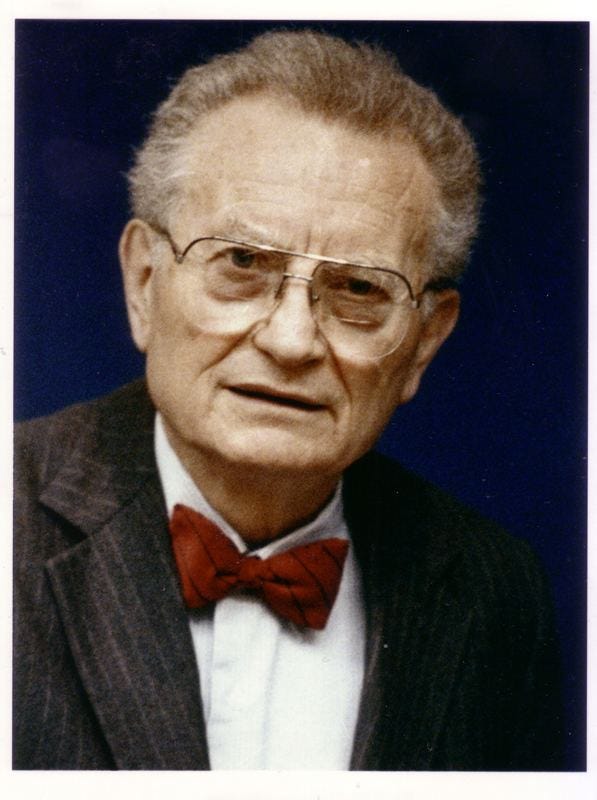
Samuelson’s piece reads less like an intellectual engagement with Hayek and more like the victor’s retrospective indulgence toward a defeated rival. To be sure, Hayek is granted originality, even genius in spots, but only after Samuelson carefully confines him to the margins of “serious” economics. But, the striking thing is not merely the condescension. It is how much Samuelson misunderstands what Hayek was actually trying to do.
“Mumbo-Jumbo” and the Keynesian blind spot
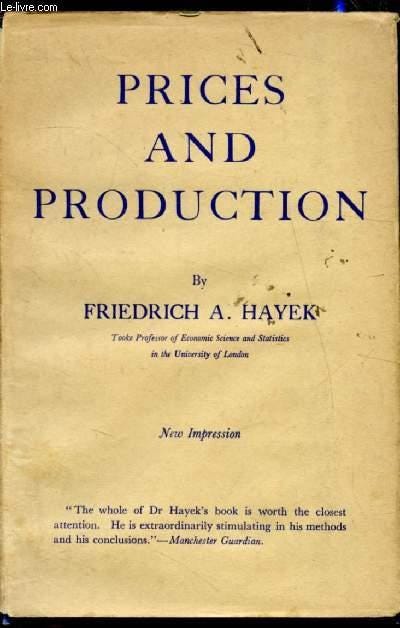
The tone is set early and firmly! Samuelson outright dismisses Hayek’s 1931 contribution, Prices and Production as “mumbo-jumbo about the period of production” that “grossly misdiagnosed” the macroeconomics of the Depression. This is classic Samuelson: (very) rhetorically confident, historically triumphant, and conceptually inattentive.
Hayek’s theory was never primarily a short-run theory of aggregate demand management. Samuelson reads Hayek as though he were simply offering a bad Keynesian model before Keynes perfected the genre. But Hayek’s central concern was different: the intertemporal coordination of production under distorted price signals generated by credit expansion. And, as I explained in an earlier post, John Hicks interpreted Hayek’s theory as a theory of growth and how growth could be harmed by monetary policy.
That is not “mumbo-jumbo.” It is a theory about how monetary disturbances alter the structure of relative prices and thereby misalign investment plans across time. It is an important theme in the history of economics, part of what Axel Leijonhufvud called “the Wicksell connection.”
Hayek’s “period of production” language admittedly became cumbersome and overextended. And Prices and Production is a hard read. Even sympathetic readers concede that. But Samuelson caricatures the argument rather than engaging it. The Austrian claim was not that recessions are caused by “too much employment” or that recovery policies are necessarily evil. It was that artificially cheap credit can generate patterns of investment that later prove unsustainable once underlying consumer preferences and resource scarcities reassert themselves.
One may disagree with that theory. But Samuelson’s presentation reduces it to a cartoon. His line that “if Hayek believes that the spending of newly printed currency on employment and consumption will worsen our current terrible depression, then Hayek is a nut” is revealing precisely because it assumes the Keynesian framework as self-evidently exhaustive.
Hayek’s question, however, was never merely whether stimulus can raise employment in the short run. It was whether monetary expansion distorts the informational and coordinating role of prices in ways that create deeper structural maladjustments later. Samuelson never really enters that argument.
Hayek as failed economist, successful philosopher?
Samuelson repeatedly suggests that Hayek effectively failed as an economist and escaped into philosophy after losing to Keynes. Hayek’s economics, he writes, fell into a “black hole.” Hayek’s 1941 book, The Pure Theory of Capital was “a pebble thrown into the pool of economic science that seemingly left nary a ripple.”
Again, the tone matters. Samuelson writes as though economics had decisively settled the questions Hayek raised. However, in actuality much of twentieth-century macroeconomics eventually moved toward concerns Hayek had emphasized: imperfect knowledge, dispersed information, heterogeneous capital, expectations, coordination problems, and the limits of centralized optimization.
Ironically, Samuelson’s own highly formalized equilibrium economics often abstracted away precisely the epistemic problems Hayek insisted were fundamental.
Indeed, Samuelson praises Hayek’s work on information while subtly domesticating it into the mainstream neoclassical framework. Hayek’s “greatest important contribution,” he says, was “information economics.”
But Hayek’s argument was far more radical than Samuelson acknowledges. Hayek was not merely adding “information” as another variable into equilibrium theory. He was challenging the very assumptions that made equilibrium models tractable in the first place. The central planner problem was not computational in the narrow sense. It was epistemic.
Knowledge is dispersed, tacit, context-specific, and often inarticulable. Market prices are not simply outputs of a known optimization problem; they are discovery mechanisms through which individuals coordinate plans they themselves only partially understand.
Samuelson turns Hayek into a precursor of modern information economics while stripping away the deeper challenge Hayek posed to the equilibrium imagination itself.
The Scandinavian straw man
The essay becomes especially weak when discussing The Road to Serfdom. Samuelson treats the book as a prediction that welfare states like Sweden or Denmark would become Nazi-style dictatorships. Since Sweden and Denmark did not become totalitarian, Samuelson concludes Hayek’s fears were refuted.
But this is a totally crude reading of Hayek. Hayek’s argument was not that every welfare state inevitably culminates in concentration camps. His concern was with the political logic of comprehensive economic planning—especially the way coercive powers expand when governments attempt to direct economic life according to unified collective purposes.
Hayek repeatedly distinguished between limited welfare measures compatible with liberalism and centralized planning incompatible with it. His 1960 book, The Constitution of Liberty essentially endorses a number of of welfare state measures. Samuelson collapses those distinctions.
This matters because Samuelson interprets Hayek entirely through the lens of postwar American liberalism: if mixed economies survived without fascism, then Hayek must have been hysterical!
But Hayek’s argument was institutional and constitutional, not prophetic in the crude sense Samuelson imputes to him. Hayek worried about cumulative erosions of spontaneous order, rule-bound governance, and decentralized decision-making. One can debate whether those worries were justified without pretending that Hayek predicted Copenhagen or Stockholm would become Stalinist.
Samuelson prefers the easier target …
The psychological reduction
Perhaps the most revealing passages come near the end, where Samuelson subtly psychologizes Hayek’s intellectual disagreements. Hayek becomes “slightly depressive.” His ideological persistence is framed as irritation in old age. Samuelson even compares him to elderly scholars whose personalities deteriorated because of failing arteries.
The implication is unmistakable: Hayek’s continued disagreements with Samuelson are not really substantive intellectual disputes but manifestations of temperament, aging, or personality. This is deeply patronizing.
Samuelson never seriously entertains the possibility that Hayek’s criticisms of Keynesianism, planning, inflationism, or technocracy might have enduring force. Instead, Hayek is transformed into an interesting but flawed character in the grand Samuelsonian narrative of enlightened centrist progress.
Even Samuelson’s praise has this quality. Hayek is admired the way one admires a gifted dissenter who contributed usefully before history moved on. A smart loser, essentially.
The irony
The deepest irony is that Samuelson’s essay unintentionally vindicates Hayek.
Hayek spent his career warning against intellectual overconfidence—especially among experts who believed they possessed sufficient knowledge to manage complex social orders from above. He titled his Nobel Prize speech “The Pretence of Knowledge.”
Samuelson’s remembrance radiates exactly that confidence. He writes as the representative of a victorious postwar technocratic consensus: Keynesian demand management, welfare-state liberalism, and mathematically formalized economics. Hayek appears as the colorful dissenter who misunderstood where history was going. But history did not end there.
Inflation crises, stagflation, knowledge problems in planning, public choice critiques of government, and renewed attention to institutions and incentives all complicated the Samuelsonian post-war consensus. Meanwhile, Hayek’s work on dispersed knowledge became increasingly central to economics, political theory, and even cognitive science.
Samuelson wanted to preserve Hayek as a partially redeemed eccentric: wrong about macroeconomics, wrong about politics, but useful on information. The problem is that Hayek’s insights cannot be compartmentalized so neatly. His theory of knowledge was inseparable from his skepticism toward centralized economic control and technocratic ambition.
That is exactly what Samuelson never fully grasped.